
Evansville Flood Cleanup
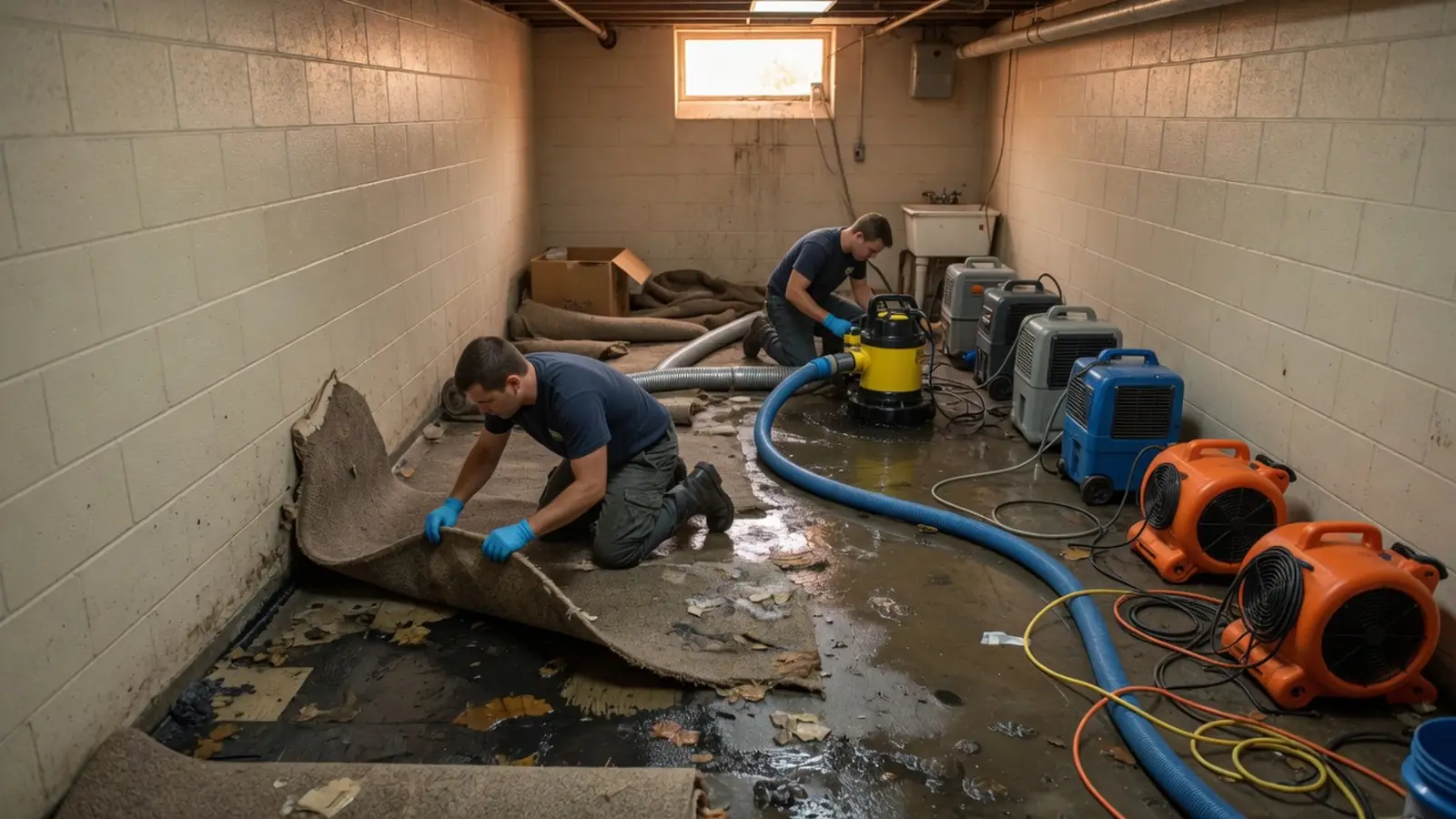
Torrential storms can overwhelm sump pumps and force dirty water through foundation walls into lower living spaces. Our emergency crews arrive quickly to extract standing floodwater, remove contaminated materials, and deploy industrial dehumidification systems. We restore structural framing before mold spreads through damp wall cavities.
Call (812) 555-0173 and we'll come look underneath with lights and meters.
Local Flood Restoration Specialists
Heavy precipitation along the Ohio River valley regularly drives groundwater levels above basement slab elevations.
A pattern echoed in public discussions is that local basements face surface runoff breaching foundation walls when torrential rain overwhelms standard drainage.
When outdoor floodwater enters a home, our team deploys heavy extraction units to remove moisture before secondary microbial colonies colonize subflooring.
For broader property recovery, you can explore our comprehensive emergency water damage restoration services to stabilize structural framing.
We carefully inspect sill plates, masonry mortar joints, and electrical connections to verify complete drying before rebuilding begins.
Structured Steps To Remediate Water Ingress
Homeowners often describe how a sump pump runs non-stop during wet periods while the basement still retains high moisture levels and a musty smell. Our systematic remediation process eliminates standing water and controls indoor humidity to protect your property.
- Immediate Extraction And Water Removal. We extract standing floodwater using truck-mounted pumps and commercial wet vacuums to halt moisture migration across concrete slabs.
- Flood Cuts And Material Removal. Technicians cut away saturated drywall and pull soaked insulation at least twelve inches above the flood line. Property owners frequently report standing water and severe mold growth penetrating crawl spaces after heavy rainfall, threatening structural subfloors.
- Antimicrobial Treatment And Sanitation. When foundation walls experience water penetration, you can review our professional approach to resolving basement flooding to ensure porous masonry is properly disinfected.
- Dehumidification And Moisture Verification. Commercial LGR dehumidifiers and high-velocity air movers dry structural framing, with daily moisture probe readings verifying deep wood dryness.
Our Workmanship Commitment
Attempted DIY cleanup after a flood event without professional drying equipment frequently leads to secondary mold blooming along drywall and baseboards within days. If fungal growth has already taken hold inside wall cavities, you can learn how we handle containment and mold remediation safely. We adhere strictly to industry structural drying protocols to guarantee that every treated space reaches baseline moisture content.
Basement Sump Pump Failure Cleanup
When torrential storms overwhelm sump pumps or primary mechanical floats fail during severe rain, our team extracts pooled water and sanitizes masonry.
Exterior Runoff Water Mitigation
We clear surface water breaching foundation perimeter walls and help homeowners plan moisture diversion before foundation decay sets in.
Flooring And Structural Salvage Assessment
We evaluate whether hardwood flooring or carpet submerged under outdoor floodwater can be sanitized and saved or requires complete replacement to protect indoor air quality.
Dedicated Moisture Recovery And Structural Drying
We approach flood recovery with calibrated diagnostic equipment, focusing on thorough moisture elimination and hygienic sanitation for every affected residential structure.
- 12Zip Codes Served
- 6Service Areas
- 3Services Offered
Read honest feedback from regional property owners who relied on our crew to stabilize their homes after severe flooding events.
“A severe thunderstorm washed out our access road right as the crew arrived, but they staged portable pumping gear on foot without missing a beat. Within three hours they had our flooded utility room drained and under negative air pressure. Their commitment to keeping the recovery schedule on track saved our furnace.”
Marcus T.
“My elderly mother uses a walker, so the crew took extra care to keep power cords taped down and containment barriers completely clear of her hallway. They checked moisture readings quietly around her room to ensure she was never disturbed during the structural dryout. We appreciated that level of genuine respect.”
Brenda K.
“We initially received a cheaper bid from a general contractor who merely suggested placing a box fan and spraying bleach over our wet baseboards. This team brought commercial dehumidifiers, performed proper flood cuts, and showed us hidden moisture pockets that would have rotted our framing.”
Darren V.
“When storm water overwhelmed our finished lower level, the crew handled the local moisture clearance documentation and disposal permits by the book. The municipal inspector passed their structural dryout check on the first visit with zero issues. Doing things right the first time spared us a huge headache.”
Hannah R.
Frequently Asked Questions
Can hardwood flooring or carpet submerged under outdoor floodwater be saved?
Submerged carpet padding requires immediate disposal, while hardwood flooring or carpets contaminated by outdoor floodwater rarely can be salvaged. Outdoor storm runoff carries bacteria, silt, and chemicals classified as black water. Porous carpet fibers trap contaminants deeply, making sanitary restoration impossible, and subfloor warping typically forces complete hardwood replacement.
How quickly does mold bloom after a basement flood event?
Active mold spores begin colonizing wet drywall, baseboards, and structural framing within twenty-four to forty-eight hours of water exposure. Delaying extraction or relying solely on residential box fans leaves trapped humidity inside wall cavities, causing rapid fungal spreading.
Why does my basement smell musty if the sump pump runs non-stop?
A continuously running sump pump indicates high hydrostatic pressure, but it cannot remove ambient humidity trapped in masonry and subfloors. Porous concrete foundations absorb surrounding groundwater like a sponge. Industrial dehumidifiers are necessary to lower relative humidity below fifty percent and stop microbial growth.
What height should drywall flood cuts be made during remediation?
Drywall flood cuts should be made at least twelve to twenty-four inches above the highest water mark to uncover concealed moisture and mold. Water wicks upward through porous gypsum board and fiberglass insulation. Cutting well above the visible water line ensures all hidden dampness and insulation backing are removed.
How does exterior runoff cause sudden basement water intrusion?
Persistent surface rainwater and pooling runoff create intense hydrostatic pressure that breaches foundation wall cracks and basement cold joints. When saturated yard soil cannot drain quickly, groundwater pushes through masonry mortar lines. Professional water extraction removes the floodwater while long-term drainage upgrades redirect surface flow.