
Emergency Water Damage Restoration Evansville IN
When plumbing failures strike older structures, immediate mitigation prevents catastrophic structural rot. About 51% of housing units locally (29,893 of 58,492) were built before 1960, the era of galvanized steel supply lines and cast iron drains prone to sudden ruptures. Our certified crews respond day or night with industrial extractors and targeted drying systems to stabilize your property before moisture spreads.
Call (812) 555-0173 if water is still coming in. We'll help you stop it before we arrive.
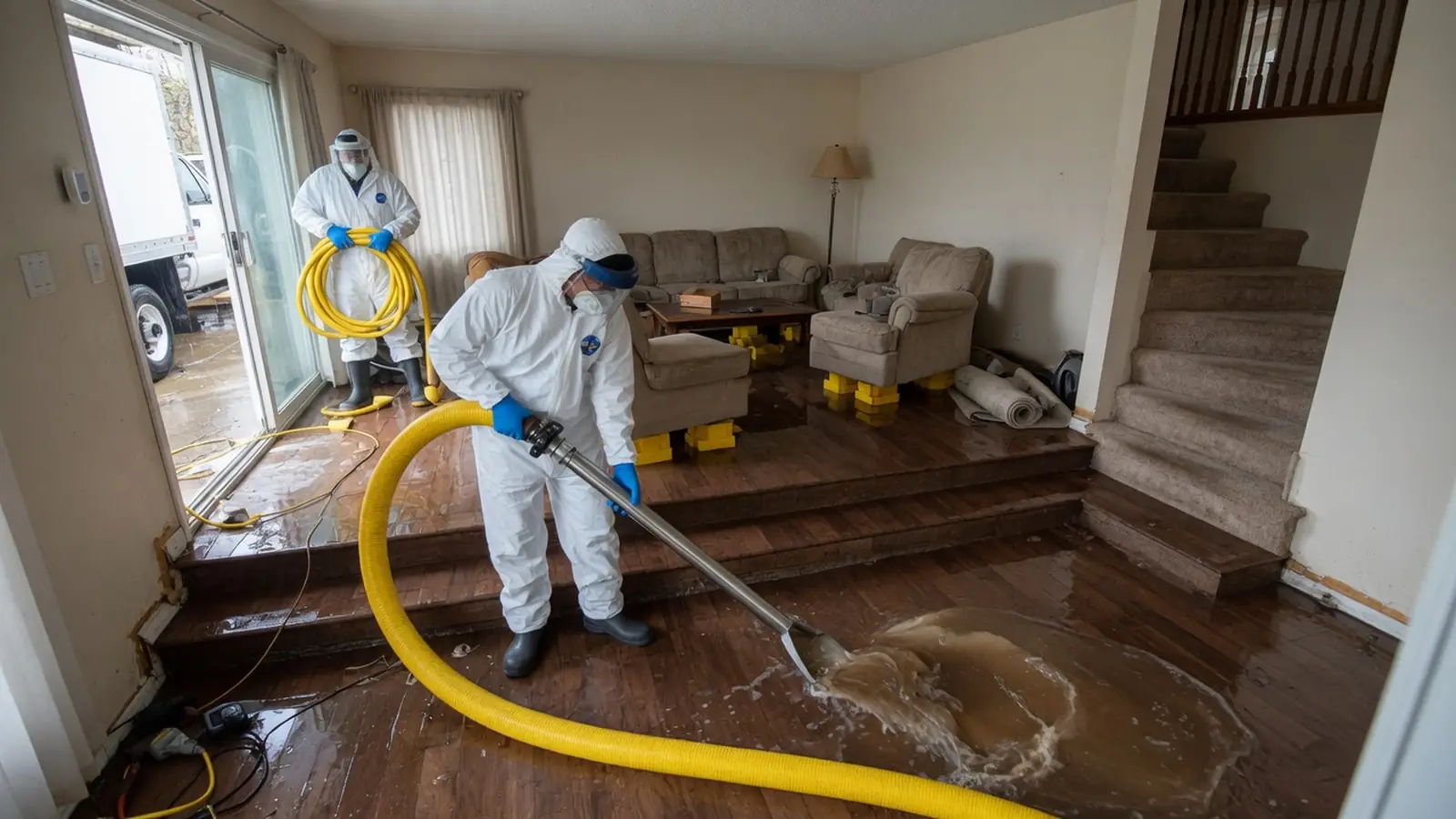
Dedicated Local Water Extraction Specialists
Our mitigation team brings decades of hands-on structural drying experience to residential and commercial properties throughout the Ohio River valley.
About 9% of housing units locally (5,196 of 58,492) were built in the 1960s, overlapping the years aluminium branch wiring was installed that requires cautious isolation during wet extractions.
About 24% of housing units locally (13,929 of 58,492) were built in the 1970s and 1980s, overlapping the years polybutylene supply piping was commonly installed and known for unexpected indoor splits.
About 84% of housing units locally (49,018 of 58,492) were built before 1980, the period when asbestos-containing materials and lead paint were still in use and require careful environmental containment during tear-outs.
A frequent problem homeowners often describe in public discussions is a mechanical float switch hanging up inside the sump pit during a torrential storm, which is why we guide property owners on how to resolve basement flooding from unexpected pump failures.
We deploy thermal cameras and moisture meters on every assessment to map hidden saturation behind baseboards before pulling extraction equipment.
Our technicians document all psychrometric drying logs and moisture readings directly for your insurance adjuster to accelerate claims processing.
How We Restore Water Damaged Structures
Ground saturation directly influences foundation hydrostatic pressure during storm surges. The dominant mapped soils across the territory (IN163) by acreage are Hosmer silt loam, 2 to 5 percent slopes, eroded; Huntington silty clay loam; Hosmer silt loam, 5 to 10 percent slopes, severely eroded; Weinbach silt loam. Our structured mitigation process halts water migration and protects structural framing from the perimeter inward.
- Immediate Extraction & Perimeter Containment. We mobilize submersible pumps and truck-mounted vacuum units to eliminate standing floodwater immediately upon arrival. Because the single most extensive soil unit mapped around the region is Hosmer silt loam, 2 to 5 percent slopes, eroded, covering about 19,391 acres of IN163, slow percolation frequently holds excess groundwater against foundation walls after downpours. Fast extraction stops water from rising into subfloors and wall cavities.
- Moisture Mapping & Thermal Inspection. Technicians inspect wall cavities and subflooring using non-penetrating meters and infrared imaging to identify hidden dampness. If exterior washouts have introduced mud and sediment through crawl vents, you can review our comprehensive flood cleanup protocols for residential structures. Mapping every moisture boundary ensures drying equipment targets the exact damp zones.
- Industrial Dehumidification & Air Movement. We position commercial LGR dehumidifiers and high-velocity air movers to pull bound moisture out of studs, subfloors, and drywall assemblies. As homeowners frequently report on social forums after attempting DIY mop-ups, skipping professional drying equipment often leads to secondary mold blooming along baseboards within forty-eight hours. Continuous daily psychrometric readings verify that framing reaches dry standard equilibrium.
- Antimicrobial Treatment & Structural Stabilization. We apply EPA-registered antimicrobial wash down exposed wood framing and masonry to eliminate organic hazards and odor-causing bacteria. To ensure moisture never causes long-term structural contamination, explore certified mold remediation after structural water damage to safeguard your indoor air. Once surfaces are sanitized and dry, your structure is fully stabilized for rebuilding.
Our Workmanship & Drying Standard
Severe local weather frequently breaches building envelopes through hail-damaged roofing and compromised flashings before storm runoff cascades downward into living spaces. Regional records confirm NOAA radar recorded 2,249 hail signatures within about 15 miles of the city center between 2021-2025 (2021: 107, 2022: 625, 2023: 722, 2024: 446, 2025: 349). Our technicians respond rapidly to seal exterior penetrations, extract incoming stormwater, and dry framing back to established baseline standards.
Burst Pipe Water Extraction
Aging plumbing lines can rupture without warning behind walls or under subfloors. We isolate supply lines, pump out flooded living spaces, and place drying equipment to save hardwood floors and framing. Complete moisture logs are recorded for your insurance file.
Storm Water Extraction & Drying
Severe convective storms frequently breach roofs and drive bulk water into attics and wall cavities. The heaviest recent hail year around the area was 2023, with 722 radar hail signatures inside a 15-mile radius, leaving many building envelopes vulnerable to sudden roof-to-basement leaks. We deploy heavy-duty pumping equipment and desiccant drying units to remove stormwater fast.
Crawl Space & Basement Dewatering
High water tables and dense local silt soils force standing water through foundation cracks and subfloor vents. We pump out saturated crawl trenches, extract basement floodwater, and set up negative-pressure drying to prevent subfloor rot. All affected structural timber is treated against organic growth.
Our Approach To Emergency Water Restoration
We arrive equipped to stabilize water emergencies with rapid extraction, structural drying equipment, and thorough moisture documentation for insurance claims.
- 9Zip Codes Served
- 8Service Areas
- 3Services Offered
Read firsthand experiences from local property owners who relied on our emergency water extraction and structural drying services after sudden pipe ruptures and severe flooding.
“Watching the precision they used when cutting out damp drywall made a huge impression on me. The crew chalked laser-straight flood cuts exactly two feet above the moisture line, leaving undamaged wall studs perfectly smooth and ready for hanging new sheetrock. Their containment barriers kept fine dust completely out of the adjacent living areas.”
Marcus T.
“When my next-door neighbor had their crawl space take on water during spring storms, I immediately sent them this company's direct number. The crew had saved our finished basement just three weeks earlier by pumping out standing runoff before framing absorbed it. Seeing how quickly they stabilized our house gave my neighbor total peace of mind.”
Brenda K.
“A hidden subfloor leak behind our washing machine revealed rotted sill plates that nobody expected to find under the tile. The team stayed calm, immediately braced the adjacent joists, and brought in high-capacity desiccant dehumidifiers to dry the subfloor framework before continuing. They communicated every structural step clearly without pausing the drying schedule.”
Darren P.
“Our buyer's home inspection was scheduled just forty-eight hours away when a supply line split under the kitchen sink. The crew set up containment zones and operated high-velocity air movers around the clock to meet our inspection deadline. Every moisture reading passed the inspector's pin probe tests without delaying our property closing.”
Elena V.