
Evansville Mold Remediation
Sustained summer humidity in the Ohio Valley keeps indoor relative humidity elevated, allowing active mold colonies to establish on damp drywall within 24 to 48 hours of water intrusion. Stabilizing indoor air immediately after securing the scene prevents secondary damage while waiting for insurance adjuster inspection. Our certified technicians isolate the contamination, remove fungal growth at the root, and completely dry structural framing.
For a Evansville inspection, call (812) 555-0173.
Restoring Healthy Indoor Environments
The median owner-occupied home locally was built in 1959 according to Census ACS 5-year data, presenting older timber frames that absorb moisture rapidly.
With 58,492 housing units on record in the Census ACS 5-year estimates, aging properties frequently suffer from hidden moisture pockets behind vintage plaster and drywall.
About 9% of housing units in the local area (5,301 of 58,492) were built since 2000, so a substantial share of the local stock is still on its original systems.
A frequent pattern echoed in public discussions is when a homeowner attempted DIY cleanup after a flood event without professional drying equipment, leading to secondary mold blooming along drywall and baseboards within days.
Our technicians combat these persistent moisture threats by scheduling prompt emergency water damage restoration services to stabilize structures before microbial growth takes hold.
We deploy commercial dehumidifiers and negative air machines to extract deep-seated dampness from subfloors and wall cavities.
Every remediation project concludes with thorough clearance testing to guarantee that living areas remain completely safe for your family.
How We Safely Eliminate Mold Colonies
Homeowners often describe how a mechanical float switch hung up inside the sump pit during a storm, causing the pump to fail to trigger and resulting in standing water across the basement. When severe groundwater seeps in, resolving basement flooding before fungal colonies spread requires an exacting, containment-first approach.
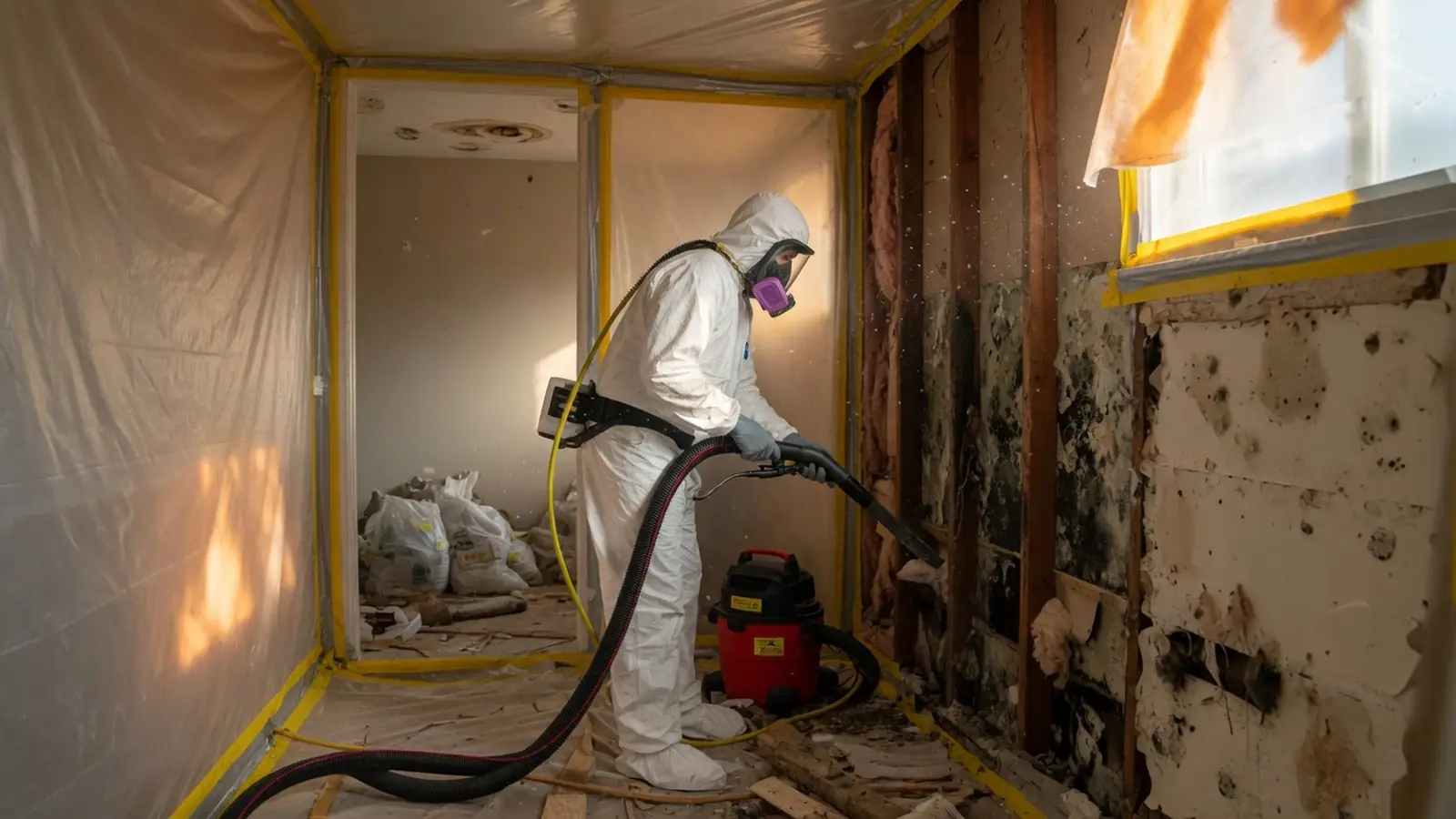
- Containment And Negative Air Isolation. Crews isolate contaminated zones under negative air pressure using sealed poly barriers and HEPA air scrubbers to prevent fungal spores from spreading into unaffected living spaces. This containment barrier seals off doorways and HVAC vents to keep your clean rooms completely protected.
- Physical Removal And Deep Root Treatment. Many wonder why spraying household bleach on drywall mold fails to kill the underlying roots inside porous subflooring and framing timber. Bleach stays on the surface while water feeds the roots beneath, so we physically remove compromised materials and treat structural wood with penetrating antimicrobial agents.
- HEPA Vacuuming And Air Scrubbing. We run medical-grade HEPA vacuums across all exposed joists and studs to capture settled spores and fine microscopic residue. Continuous commercial air scrubbing scrubs the ambient environment, filtering out particulates until indoor air quality returns to baseline levels.
- Structural Dehumidification And Clearance. Industrial low-grain refrigerant dehumidifiers extract residual moisture trapped deep inside dense building assemblies. We verify structural dryness with calibrated pin-less moisture meters to ensure fungal growth cannot return.
Our Disciplined Containment Standard
When exterior drainage ditches overflow during severe regional storms, overflowing ditch floodwaters deposit silt, mud, and debris that require complete drainage, intensive remediation, and water safety testing before safe use. If heavy surface runoff enters your lower levels, handling comprehensive flood cleanup is essential to neutralize pathogens and hazardous residues. We treat every job site with hospital-grade containment protocols, never relying on superficial surface wipe-downs. Our team adheres strictly to industry remediation standards, ensuring contaminated porous materials are safely stripped while structural timbers are dried and sanitized down to safe moisture thresholds.
Attic And Roof Leak Mold Remediation
Roof leaks and poor attic ventilation trap condensation along roof decking and rafters. We seal the attic space, eliminate established fungal colonies, and dry framing to protect structural integrity.
Basement And Crawl Space Mold Treatment
Subterranean moisture migration creates ideal damp conditions for persistent mold along floor joists and subflooring. We clean contaminated lumber, deploy commercial drying systems, and apply protective barriers.
Drywall And Wall Cavity Remediation
Hidden plumbing leaks inside interior partitions allow toxic mold to flourish out of sight. We open affected wall cavities under containment, dispose of damp drywall, and treat interior framing.
Our Commitment To Safe Indoor Environments
We approach every remediation project with rigorous containment, clinical precision, and verifiable moisture testing. Our certified crews prioritize your household health by completely removing fungal sources rather than masking odors.
- 26Zip Codes Served
- 4Service Areas
- 3Services Offered
Here is how local property owners describe their experience with our containment, mold removal, and structural drying services.
“After finding black patches behind our laundry room drywall, the crew stepped in immediately and contained the entire space before spores could spread. I already recommended them to my next-door neighbor when her utility closet started showing signs of dampness. They treated our home with incredible care and solved the problem at the root.”
Marcus B.
“A previous handyman tried to scrub our basement joists with standard bleach, which only caused the fungal growth to return twice as thick a month later. This company tore out the ruined insulation, treated the framing with commercial antimicrobials, and finally fixed the underlying issue. The difference in their containment process and technical knowledge was night and day.”
Rachel T.
“We received a detailed, line-item estimate before any containment barriers went up, and the final invoice matched that quote down to the dollar. The team explained exactly what materials needed disposal and what could be dried in place without pushing unnecessary add-ons. Finding honest contractors who stick to their initial bid is a rare relief.”
Derek K.
“Every afternoon before packing up, the crew vacuumed the perimeter with HEPA filters and ensured all plastic containment seals were completely intact. They kept all equipment neatly organized in the garage so our hallway was never blocked. You would hardly know major remediation was happening behind the sealed plastic.”
Elena S.
Frequently Asked Questions
Why does bleach fail to kill mold on porous building materials?
Spraying household bleach on porous drywall fails to kill underlying fungal roots inside subflooring and framing timber, fueling rapid recurrence. Bleach stays strictly on the surface while its high water content permeates the wood, providing moisture that helps deep-seated hyphae regenerate.
How quickly does mold colonize after moisture intrusion?
Sustained regional humidity allows active mold colonies to establish on damp building materials within 24 to 48 hours of initial water intrusion. Because fungal germination happens so quickly in humid conditions, extracting standing water and stabilizing indoor relative humidity immediately is critical.
How do technicians prevent fungal spores from spreading during removal?
Crews isolate work zones under negative air pressure using sealed poly barriers and HEPA air scrubbers to keep airborne spores out of living areas. Continuous exhaust ducting vents filtered air outdoors while creating constant inflow, guaranteeing that microscopic particles cannot escape into clean rooms.
Should indoor air be stabilized before the insurance adjuster arrives?
Stabilizing indoor air immediately after securing the scene prevents secondary damage while waiting for an insurance adjuster inspection to occur. Taking photo documentation before running dehumidifiers satisfies policy requirements while protecting subflooring and drywall from rapid fungal colonization.
What should be done if floodwaters enter through basement walls?
Basements inundated with exterior runoff require complete water extraction, structural remediation, and thorough decontamination before safe use. Storm water and ditch overflow carry silt and hazardous contaminants that saturate concrete block and framing, demanding antimicrobial washdowns.